[smartslider3 slider=1]
Registered Patients
Support Us
“We make a living by what we get, but we make a life by what we give.”
– Winston’ Churchill
Volunteer
“Life’s most persistent and urgent question is, What are you doing for others?”
– Martin Luther King
WHO ARE WE!!
I Dream Too (IDT) Trust is based on the motto that everyone has an equal right to dream and should get an equal opportunity to grow. People with rare diseases are some of the most overlooked part of the society where patients and their families are suffering in silence. They need an environment where their basic needs could be met with equal rights to grow. We are a team of people who ourselves suffering from rare diseases (hemophilia is a rare bleeding disorder) and have been working constantly to create social awareness about the rights of people with rare diseases. I Dream Too will work towards building platforms all across India and other parts of the world, joining hands with people and organizations working for welfare of persons with rare diseases. We will also be assisting the governments in policy making and their implementation aimed at the welfare and empowerment of persons with rare diseases.
Founder
Mr. Rajan Chaudhary
UPCOMING & PAST EVENTS
PAST EVENTS
5 April 2025
Awareness Program for Families of Hemophilia and Hemoglobinopathies at PGI Nodia
27 March 2025
Free Factor (injection) Distribution For Hemophilia Patients at Medical Collage Saharanpur
07 March 2025
Free Factor (injection) Distribution for Hemophilia patients in Meerut
UPCOMING EVENTS
17 April 2025
🌍 World Hemophilia Day Celebration
24 April 2025
🌍 World Hemophilia Day Celebration in Saharanpur Medical College
26 April 2025
🌍 World Hemophilia Day Celebration in PGI Nodia
MAKE DONATION
We are working together to improve the treatment and life quality of the blood disorder patients. As the medication & treatment is very expensive, we need your support.
WHY VOLUNTEER
As per some recent surveys, around half of the haemophiliacs in the world live in India, out of which 70% do not have adequate knowledge or access to treatment.
LET’S GET TOGETHER
Nothing could be possible without you, we are eagerly waiting for you to join us and pledge for spreading awareness so that not even a single patient remain undiagnosed.
WE CARE FOR
THALASSEMIA
PSORIASIS
HAEMOPHILIA
FREQUENTLY ASKED QUESTIONS
What is Hemophilia?
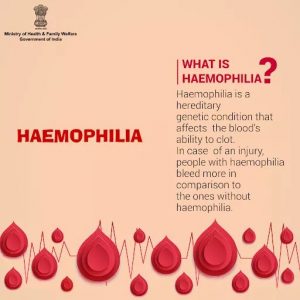
Hemophilia is a genetic blood disorder in which blood does not clot normally because a blood-clotting protein (clotting factor) is either missing or is in low quantity. The disease is almost exclusively seen in males though females are asymptomatic carriers and can be categorised as case of mild hemophilia.
It is characterised by spontaneous or trauma related bleeding typically into the large joints or muscles. Untreated or inadequately treated bleeding episodes lead to joint, muscle or nerve damage resulting in progressive deterioration of function.
The prevalence of hemophilia is estimated to be about 1 in 10,000 births and that of the severe form of the disease to be about 6 per 1,00,000 population. Types
Hemophilia A: This is the most common type of hemophilia which involves deficiency of clotting Factor VIII (factor eight).
Hemophilia B: It involves deficiency of clotting Factor IX (factor nine). It is less common as compared to Hemophilia A.
Symptoms
Some of the most common symptoms of hemophilia are following:
- Bruises on body
- Spontaneous bleeding into large joints like knee, elbow and ankle resulting into swelling of the affected joint
- Prolonged bleeding after getting a minor cut or falling out of a tooth
- Stiffness in joints
- Blood in urine or stool
- Severe: Factor VIII or Factor IX level is less than 1% of normal. Spontaneous joint and soft tissue bleeding several times a month.
- Moderate: Factor VIII or Factor IX level is in the range of 1-5% of normal. Spontaneous bleeding is uncommon but occurs after minor trauma or surgery.
- Mild: Factor VIII or Factor IX level is in the range of 5-30% of normal. Only occasional bleeding related to significant trauma or surgery.
It includes a physical exam, blood screening tests, and clotting factor tests. The blood screening tests are necessary to determine the delay in blood clot formation. Clotting factor tests, also called factor assays, are required to determine the levels of clotting factors. The results of these tests reveal the type and severity of hemophilia.
This condition can’t be cured but can only be managed. Every bleeding episode should be adequately treated by replacing deficient clotting factor; the process called Factor Replacement Therapy which involves intravenous infusion of deficient clotting factor. Good joint health should be maintained by regular exercises recommended by a physiotherapist trained in management of hemophilia as strong joints bleed less. Crippling joint deformities can be effectively prevented by adequate care of each episode of bleeding, including replacement of the clotting factor lacked by the patient and very deliberate and persistent physical therapy. The care of people with hemophilia requires a multidisciplinary team to address different aspects of the patient’s problems.
Thalassemia is an inherited blood disorder characterised by less haemoglobin and fewer red blood cells in the body than normal.
There are two main types of Thalassemia:
- Alpha-thalassemia: It occurs when a gene or genes related to the alpha globin protein are missing or mutated.
- Beta-thalassemia: It occurs when a gene or genes related to the beta globin protein are missing or mutated.
The signs and symptoms depend on the type and severity of the condition.
Thalassemia signs and symptoms can include:
- Anaemia
- Fatigue
- Weakness
- Pale or yellowish skin
- Facial bone deformities
- Slow growth
- Abdominal swelling
- Shortness of breath
- Dark urine
Diagnosis of Thalassemia requires certain blood tests. When seen under microscope red blood cells from the blood sample of affected person appear small and abnormally shaped. A Complete Blood Count ( CBC) would reveal anaemia. A test called Hemoglobin Electrophoresis shows the presence of an abnormal form of hemoglobin.
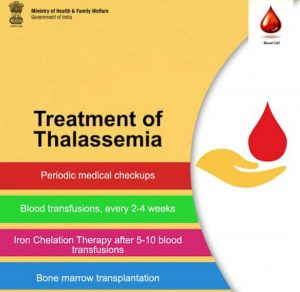
Treatment for thalassemia major (severe form of Thalassemia) often involves regular blood transfusions and folate supplements. People who receive a lot of blood transfusions need a treatment called chelation therapy. This is done to remove excess iron from the body.
Google Review
[trustindex no-registration=google]
NEWS & UPDATES
[blog grid=”4″ limit=”4″]
casino sodo66
1xbet az